Advanced Aluminum Railing Design Perspectives
Posted by Deck Expressions on Nov 16, 2026
Aluminum railings have come a long way from the basic metal barriers you might picture around an older deck. Today's designs feature slimmer profiles and a variety of configurations that complement contemporary outdoor spaces.
But choosing a railing involves looking beyond its color or appearance in a catalog. The dimensions of each component affect how the finished installation looks and functions. Exploring advanced aluminum railing design gives you a better understanding of the details behind a successful project.
Glass Panels Preserve Your Outdoor Views
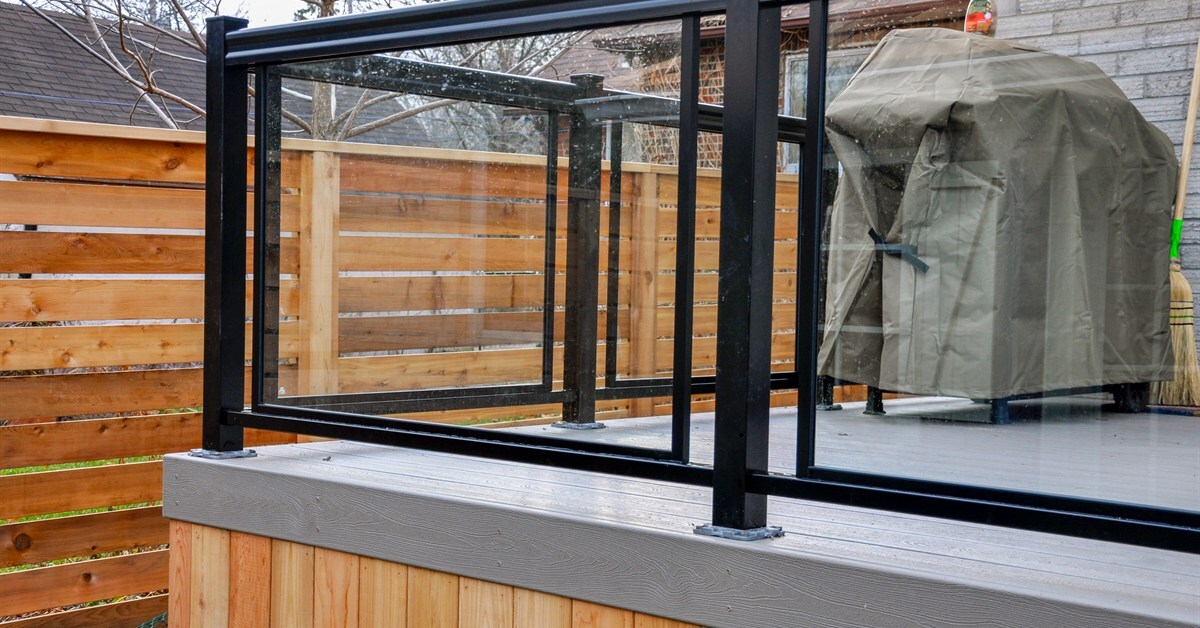
If your deck overlooks an attractive landscape, traditional balusters may interrupt the view you want to enjoy. Glass infill provides an alternative by creating a transparent barrier between the aluminum posts. You can see across the railing without the repeated vertical lines of individual balusters.
To preserve that openness, the size of the glass panels is important. Larger panels create fewer interruptions across the railing, while narrower sections place more posts within your line of sight. Choosing a system that accommodates wider panels gives you a less obstructed view.
Cable Railings Create a Minimalist Design
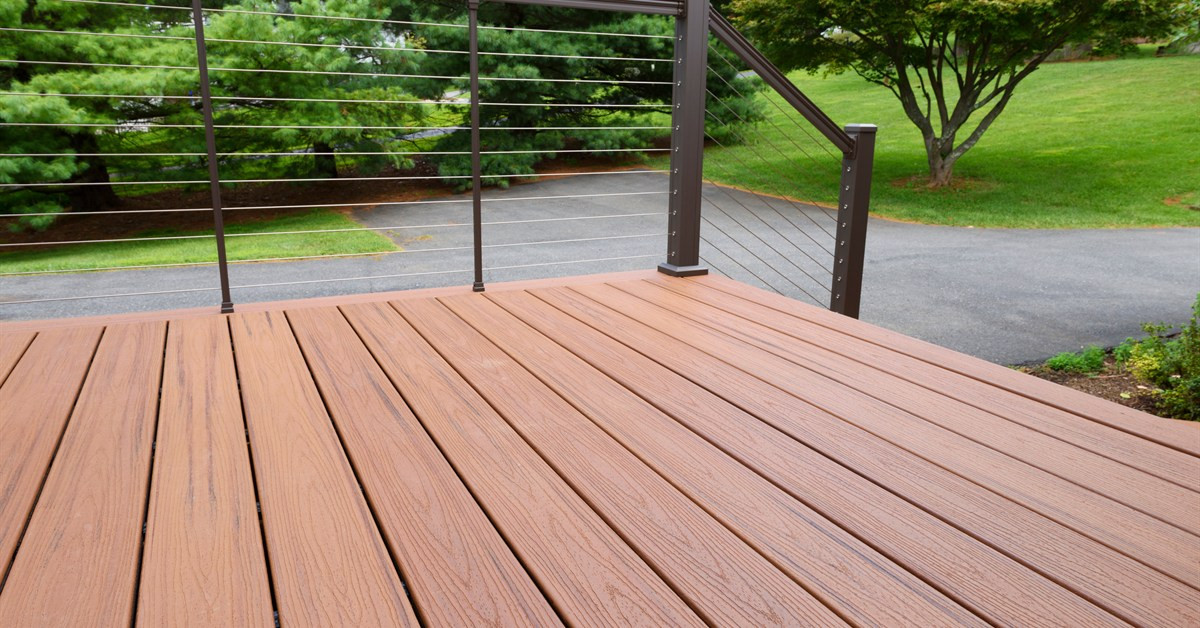
Cable infill replaces traditional balusters with thin stainless steel cables stretched between aluminum posts. Because the cables occupy so little visual space, they create an open appearance that works with contemporary deck designs. Their horizontal arrangement draws the eye across the railing rather than emphasizing its height.
The simplicity of this design depends on keeping the cables straight and evenly spaced. Each cable passes through or attaches to the posts, where tensioning hardware holds it in position. Proper tension prevents excessive movement that could affect the spacing between cables.
Since tightening the cables places force on the posts, the aluminum framing must be strong enough to resist that pressure. Choosing a railing system specifically engineered for cable infill keeps the components compatible and maintains the intended design.
Privacy Panels Create More Secluded Seating Areas
A deck positioned near neighboring properties may benefit from additional privacy around its seating area. Rather than installing solid barriers along the entire perimeter, you can concentrate screening where people spend the most time.
Privacy panels create a visual barrier between the seating area and nearby sightlines. Depending on the design, you may prefer a solid panel that blocks visibility or a slatted configuration that provides partial screening.
Panel height influences how much privacy the installation provides. Before selecting a system, examine the view from neighboring windows and determine where the screening needs to extend.
Mixed Infill Adds Variety to the Perimeter
You don't have to use the same infill style around every section of your deck. Mixing materials lets you adjust the railing design according to what surrounds each area. For example, glass panels can preserve the view from an elevated seating area, while aluminum balusters provide a more traditional appearance along the remaining edges.
To keep the design consistent, use the same aluminum posts and rail profiles throughout the installation. The matching framework connects the different sections visually.
Angled Railings Follow Unusual Deck Shapes
Decks with diagonal edges need railing connections that accommodate their geometry. Standard right-angle corner brackets won't produce the correct alignment when two sections meet at an obtuse angle.
Adjustable-angle connectors solve this problem on compatible aluminum systems. They attach adjoining sections at different angles, allowing the railing to follow the perimeter without changing the original deck shape.
The exact corner angle determines which hardware you'll need. Measuring each transition before ordering components prevents mismatched connections during installation.
Multi-Level Decks Need Coordinated Railings
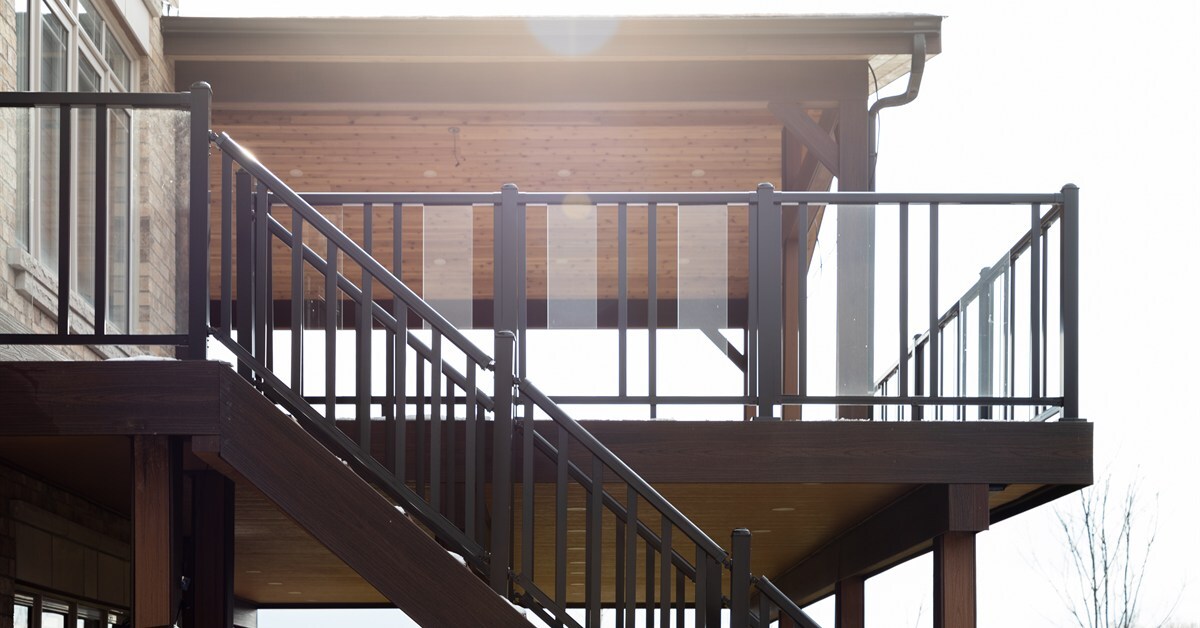
When a deck has two or more elevations, the railing becomes a visible connection between the separate spaces. Using the same aluminum profile throughout creates continuity, even when each level has a different layout.
You can vary the infill configuration according to how each level functions. An elevated sitting area may use glass to preserve the view, while a lower gathering area uses traditional balusters. Matching finishes maintains a connection between the designs.
The staircase connecting the levels should follow the same design direction. Compatible stair components let the railing continue along the slope without introducing a completely different appearance.
Railing Gates Add Controlled Access
A railing gate creates a designated opening between your deck and another outdoor area. It provides a convenient way to restrict access when needed without permanently closing off the passage.
Matching aluminum gates maintain the appearance of the surrounding railing. Their frames can feature the same baluster arrangement, so the gate blends into the adjacent sections when closed.
Gate dimensions depend on the width of the opening and the available mounting locations. You'll need hinges designed for the gate's weight and a latch suitable for outdoor use. Confirm that the assembly satisfies applicable safety requirements, particularly when the gate controls access to stairs.
Integrated Lighting Illuminates the Deck Perimeter
Lighting incorporated into an aluminum railing provides illumination without introducing separate fixtures around the deck. You can use compatible illuminated post caps to create individual points of light along the perimeter.
Under-rail lighting produces a different effect by directing light downward toward the decking. The fixtures remain less visible from above, allowing the illumination to emphasize the railing's position after sunset.
The distance between fixtures influences how evenly the light reaches the deck surface. Before choosing a layout, compare the manufacturer's recommended spacing with your railing dimensions.
Decorative Panels Introduce Custom Patterns
Decorative infill panels replace traditional balusters with larger sections featuring cutout patterns. Geometric designs create distinctive shapes within the railing while maintaining openings between the metal surfaces.
The pattern determines how much of the background remains visible. Large cutouts create an open appearance, while smaller openings produce a denser design with greater visual separation.
Panel dimensions should correspond with the railing frame to maintain consistent spacing around the perimeter. Decorative infill must also meet guard opening requirements and use approved structural connections. Look for complete railing systems that accommodate these panels rather than modifying standard baluster assemblies.
Bring Your Railing Design Together
Exploring advanced aluminum railing design gives you greater control over the finished appearance of your deck. From component dimensions to mounting locations, understanding each detail prepares you to choose a configuration that complements your outdoor space.
At Deck Expressions, we're here to help you explore your options and find components for your project. Whether you're updating an existing deck or planning a new installation, browse our aluminum deck railing ideas for inspiration.