Cable Railing Systems That Meet Deck Code Rules
Posted by Deck Expressions on Jun 30, 2026
Cable railings are a great option for homeowners who want a deck that feels more open, but they still need to protect the deck the way any other railing would. That means the system can’t rely on looks alone. It needs all the parts that make a railing safe and secure.
The best way to ensure this is to follow the standard deck codes put in place by your municipality. When you know how to set up a cable railing system that meets deck code rules and regulations, you’ll have a much more secure deck overall.
Start With the Local Code Version
Most deck railing rules come from model codes, but your local building department decides which version applies. Some areas use a recent residential code, while others still work from an older edition with local amendments.
That matters because a railing that passes in one town may need a slight change in another. Check guard height and confirm opening limits and post attachment rules before ordering anything. A quick call can prevent a rebuild after the inspector sees the finished product.
Understand the Four-Inch Opening Rule
The four-inch opening rule receives a lot of attention when it comes to cable systems. To explain the rule in simple terms, the guard shouldn’t have an opening large enough for a four-inch sphere to pass through. With rigid balusters, that test feels straightforward.
Cable behaves differently because it can flex. A gap that measures less than four inches at rest may fail when someone pushes against the cables. That’s why spacing has to work with tension and post layout instead of standing alone.
Guard Height Still Matters
It’s important to note that cable infill doesn’t replace basic guard height requirements. Residential deck guards often need to stand at least thirty-six inches above the walking surface, though some locations may require more. Stairs can also add separate handrail rules that don’t work the same way as deck guard rules.
Be sure to measure from the finished deck surface, not from framing that still needs boards. Even a small measurement error can create a finished height issue after the decking goes down. It’s easier to adjust posts before fully assembling the system.
Keep Posts Close Enough to Control Flex
Post spacing plays a major role in the performance of cable railings. Long runs give cables more room to flex out of position. Shorter spans help the system stay firm and make the opening rule easier to satisfy. Fortunately, many cable railing systems specify the maximum post spacing in their manufacturer’s instructions.
Keep in mind that end posts need extra attention because they carry cable tension. A weak end post can lean inward after the cables tighten. Once that happens, the entire run loses alignment, and the gaps change.
Use the Right Frame for the Cable Load
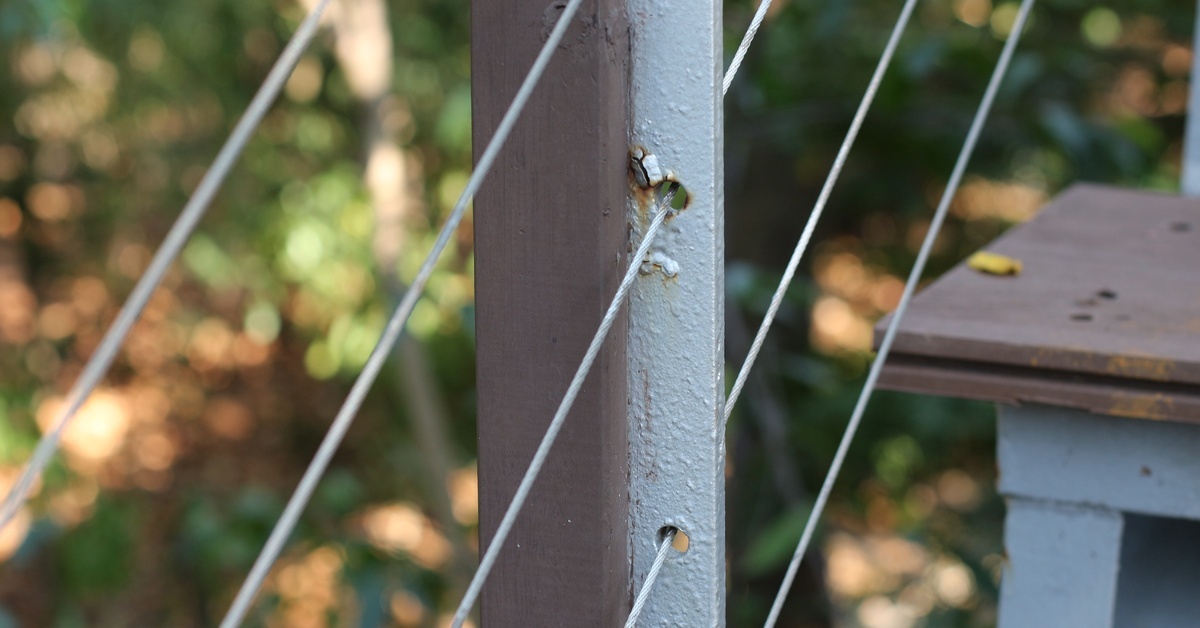
Cable railing creates a pulling force that many standard railing layouts don’t handle well. Every cable acts like a tensioned line between posts. The frame must resist that force without twisting or loosening.
Metal posts often handle cable tension well when the system was designed for that use. Wood posts can work too, but they need proper sizing and solid attachment to the deck structure.
The top rail also does more than finish the look. It helps connect the posts into one stronger assembly. Without sufficient stiffness at the top, the posts can move independently, allowing the cables to lose their tight spacing.
Match Hardware to the System
Cable railing hardware isn’t interchangeable just because the pieces look similar. Each tensioner and terminal needs to match the cable size. Fittings also need to suit the post material. If one part doesn’t seat correctly, the cable may slip or weaken over time.
Use hardware that belongs with the system whenever possible. Mixing parts can create awkward angles at corners and a weaker grip at end posts. It can also make future adjustments harder because each fitting may tighten differently.
Clean installation matters here because small errors become more noticeable when cables run across the full deck. Take the time needed to set each fitting straight before applying full tension.
Tension the Cables in the Right Order
Cable tensioning isn’t a one-pass task. Tightening one cable can change the tension in the cables above it and below it. If you tighten randomly, the finished run may look uneven even when each fitting feels secure.
Work gradually across the run. Bring the cables up to tension in stages instead of cranking one line tight at a time. Doing it this way will help the posts settle evenly and keep the spacing more consistent.
After the first round, check the gaps again. Then walk the deck and press against the cables in normal use areas. If the system opens up too much under pressure, it will likely need more adjustment before the final inspection.
Watch Corners and Stair Runs

Corners can complicate some cable layouts because the cable path will need to change direction. Some systems use separate runs that terminate at each side of the corner, while others use fittings that support a continuous line.
The right choice depends on the system design and the post layout. Don’t force a cable around a corner unless the hardware supports that approach. A sharp turn can damage the cable or prevent proper tension.
Stair runs need even more care. The sloped cable line alters how openings appear between posts. Stair guards may also fall under different opening allowances than level deck guards, so the layout deserves a separate check.
Plan for Inspection Before Installation
To ensure your cable railing system meets all deck code requirements, you need to maintain thorough documentation. Keep the manufacturer’s instructions available while working on the deck, and save product details that show the intended post spacing and cable size. Keep fitting information with the same paperwork.
Inspectors likely won’t fully reject a cable railing, but they do need to ensure that the system meets all of the rules. Clear documentation helps show that the layout wasn’t done haphazardly.
Build for the Deck People Will Actually Use
Even though your cable railing needs to follow these rules, that doesn’t mean it needs to be a bare-bones system. You’ll want a deck railing that wows guests while also holding up against weather and regular use.
Get yourself a cable railing for decks that has a certain level of quality and style. Once you find something good, be sure to leave room for minor movement within the system. Use sturdy posts and maybe even retension the system when the manufacturer recommends it.
A well-built cable railing system should feel tight without getting overworked. The lines stay clean while the view stays open. Most importantly, the guard still does the job it was built to do.