Engineering Specs of Galvanized Steel Railings
Posted by Deck Expressions on Nov 20, 2026
Galvanized steel railings bring strength and durability to outdoor spaces, but their performance depends on more than the metal itself. The steel's dimensions, protective coating, and structural design all contribute to how the finished railing performs under everyday use.
Understanding the engineering specs of galvanized steel railings gives you a closer look at what goes into a railing system. From load ratings to installation requirements, several technical details determine how well the structure handles outdoor conditions over time.
Steel Grades Determine Railing Strength
Not all steel has the same strength, even when two railing systems look identical. Manufacturers use different grades of steel depending on how much stress the finished structure needs to withstand.
Two measurements describe the material's strength: yield strength and tensile strength. Yield strength tells you how much pressure steel handles before it bends permanently. Tensile strength refers to the maximum stress it withstands before breaking.
Some structural steel tubing follows ASTM A500, which establishes minimum strength requirements for different grades. The specific grade tells engineers what the material can handle, giving them the information needed to design the railing.
Steel Thickness Affects Structural Performance
Steel thickness contributes to how much force a railing withstands without bending. Manufacturers select tubing dimensions based on the shape of each component and its intended structural function.
Thicker steel generally offers greater resistance to bending when other dimensions remain the same. However, the overall shape of the tubing also contributes to its strength. A hollow steel section can resist substantial bending forces without requiring a completely solid piece of metal.
Manufacturers specify the wall thickness of the steel tubing used in their systems. Those measurements give engineers a way to evaluate the railing's structural capacity and determine whether its dimensions meet the intended design requirements.
How the Galvanizing Process Works
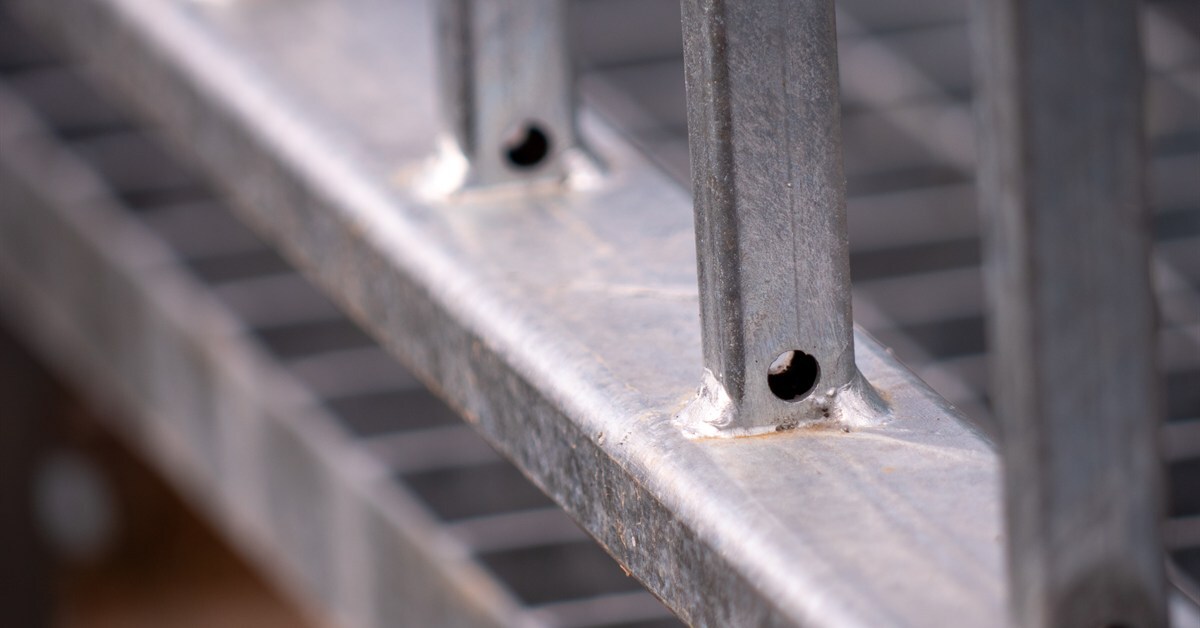
Galvanizing adds a protective zinc coating to steel, keeping the underlying metal from coming into contact with moisture. Hot-dip galvanizing is one method manufacturers use to create this protective surface.
During the process, workers lower prepared steel components into molten zinc. The zinc reacts with the steel's surface and forms bonded layers that remain attached to the metal.
Zinc has another advantage beyond creating a protective barrier. If a small area of steel becomes exposed, the surrounding zinc corrodes preferentially under suitable conditions.
The result is a railing material that handles outdoor exposure without relying entirely on paint for corrosion protection.
Zinc Coating Thickness Specifications
The amount of zinc applied during galvanizing affects how long the coating protects the underlying steel. Manufacturers measure coating thickness in micrometers or mils, with one mil equal to 0.001 inches.
ASTM A123 establishes minimum coating thickness requirements for hot-dip galvanized structural steel. The required amount varies according to the type and thickness of the steel being coated.
A thicker zinc layer generally extends the time before the underlying steel becomes exposed to corrosion. However, environmental conditions still affect the coating's expected lifespan.
Manufacturers can verify coating thickness using specialized gauges that measure the zinc layer without damaging the finished surface.
Railing Height Requirements
The height of a railing affects how effectively it protects people near the edge of an elevated deck. Building codes establish minimum guard heights based on where the railing will be installed.
Under commonly adopted residential building codes, deck guards generally need to stand at least 36 inches tall. Many commercial installations require a minimum height of 42 inches, although local rules and exceptions affect individual projects.
Height measurements run vertically from the walking surface to the top of the guard. Stair guards follow separate measurement rules.
Local building codes determine which height requirements apply, so the finished installation needs to match those specifications.
Baluster Spacing and Opening Limits
Baluster spacing controls the size of the openings between the vertical pieces of a railing. Building codes limit these openings to improve safety around elevated surfaces.
For many residential deck guards, the openings must prevent a 4-inch-diameter sphere from passing through. Stair railings have additional requirements because the openings follow the angle of the staircase.
Manufacturers account for these measurements when designing their railing panels. The width of each baluster determines how much open space remains between adjacent pieces.
A railing system designed around these requirements maintains the intended spacing when installers assemble it according to the manufacturer's instructions.
Load-Bearing Capacity of Steel Railings
People lean against deck railings all the time, so they need enough strength to handle that pressure without bending or loosening. Building codes set minimum load requirements to keep railings secure during everyday use.
Many building codes require guards and handrails to withstand a concentrated force of 200 pounds. Certain installations must also handle a uniform load of 50 pounds per linear foot, depending on local requirements.
When someone leans against a railing, the pressure travels from the top rail through the posts and into the deck framing. Manufacturers test their systems or use engineering calculations to determine how much force they can withstand. Properly installed posts and secure connections allow the railing to handle those loads without excessive movement.
Maximum Distance Between Railing Posts
The spacing between railing posts affects how much the horizontal rails bend when someone applies pressure. Greater distances between supports increase the bending forces on the rails.
Manufacturers establish maximum post spacing based on the structural design of their systems. A railing with stronger horizontal members may accommodate a longer span, but its connections must handle the resulting forces.
For example, a manufacturer may approve one railing configuration for a 6-foot span and another for an 8-foot span. Those measurements depend on the specific product's engineering.
Following the approved post spacing keeps the installed system within the limits established by its manufacturer.
Post Anchoring Requirements
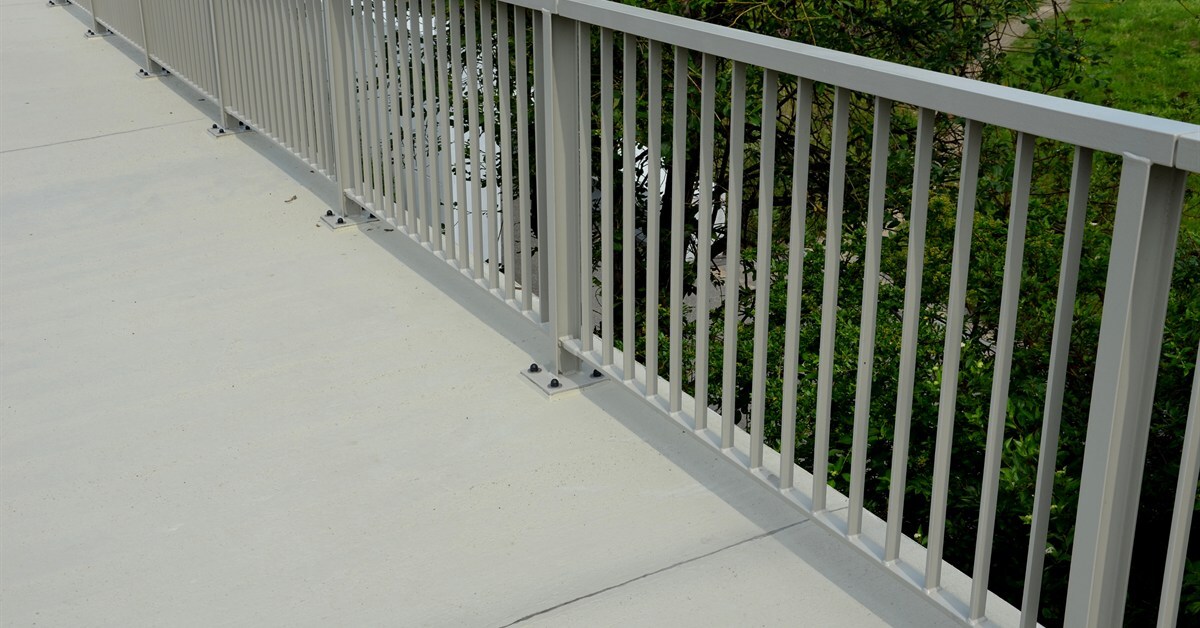
Railing posts need a secure connection to the structure underneath them. Even a strong steel railing won't perform as intended if its mounting hardware can't withstand the forces transferred through the posts.
Surface-mounted systems commonly use base plates attached to structural framing or concrete. The required fasteners depend on the material supporting the railing.
For wood decks, the framing beneath the mounting location needs enough strength to resist the loads applied to the post. Concrete installations have different anchoring requirements.
Manufacturers specify the approved hardware and attachment methods for their systems. These instructions establish how the railing should connect to the supporting structure.
Welded Connection Specifications
Some galvanized steel railing systems use welded connections to join their components. These joints transfer forces between pieces, making their construction an important aspect of structural strength.
The size and placement of each weld depend on the joint's design. Manufacturers use welding procedures that produce connections capable of handling the expected loads.
For hot-dip galvanized assemblies, fabrication commonly takes place before the zinc coating process. The completed steel structure then receives its protective coating.
Welds must also accommodate the stresses placed on the railing during use. Proper fabrication keeps the connections working with the surrounding steel rather than becoming weak points.
Choose Galvanized Railings With Confidence
Understanding the specifications of galvanized steel railings gives you a stronger basis for evaluating structural performance and long-term durability. Material strength, coating requirements, and installation details all contribute to how a railing performs after installation.
At Deck Expressions, we carry railing options for homeowners and contractors planning outdoor projects. Explore our galvanized handrails to see available designs and product details. We're here to help you find a railing system that meets your project's requirements while complementing your outdoor space.