Innovative Vinyl Decking Designs: Enhancing Curb Appeal
Posted by Deck Expressions on Sep 01, 2026
Vinyl is a popular material for deck railing because it’s low-maintenance and built for outdoor use. It also gives you plenty of design flexibility when you want the railing to work with the rest of your exterior.
If you have an existing deck you want to spruce up, or you’re in the middle of building one and want ideas for making it look its best, these innovative vinyl decking designs can maximize the curb appeal of the finished space.
Post Sleeve Width Changes How Substantial the Deck Looks
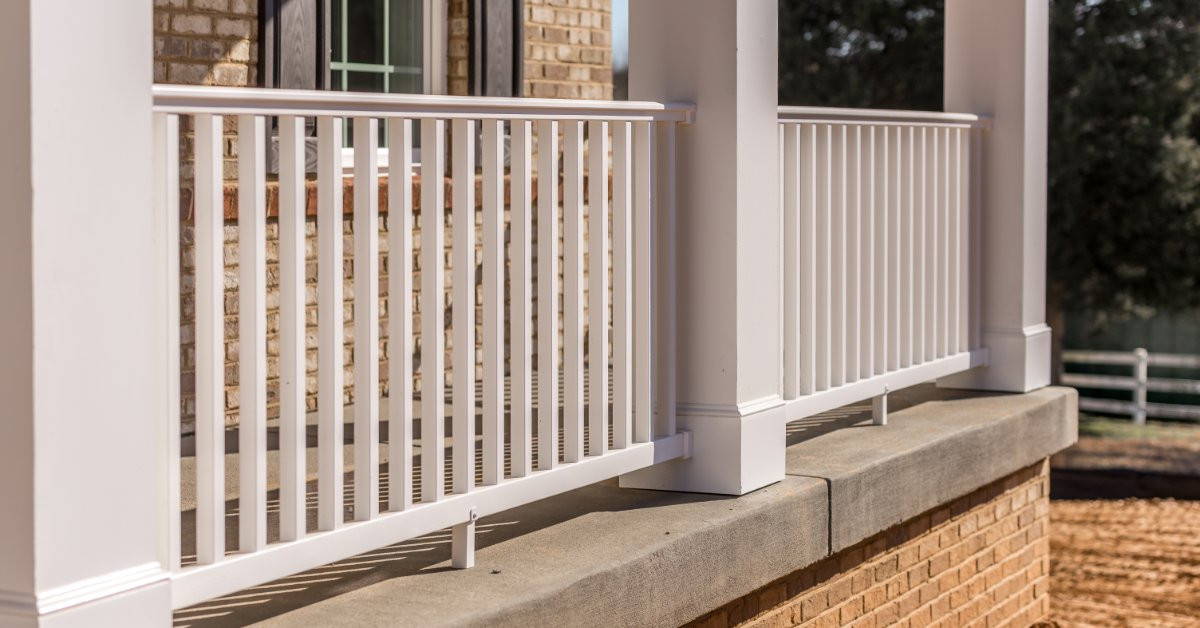
Post sleeves are the finished covers that fit over the structural posts supporting a vinyl railing system. Because those sleeves create repeated vertical lines around the deck, their width affects how substantial the entire railing looks from a distance.
A tall or wide deck has more visual mass than a small porch, so narrow sleeves may look undersized against it. Wider sleeves give those larger structures enough presence to match their scale. On a compact deck, slimmer sleeves keep the railing from taking over the exterior. You want to keep the posts proportional to the structure they surround.
Rail Profiles Determine How Much of the House Stays Visible
The top and bottom rails form the horizontal frame that holds the infill between each post. Their depth affects how much of the house you continue to see through and around the railing, especially when the deck sits in front of windows or exterior trim.
A thicker rail creates a stronger border around a large deck, while a slimmer profile leaves more of the facade exposed. On a front porch or elevated deck, that difference affects how much of the windows and exterior trim remain visible behind the railing. You want the railing to frame the deck without blocking the architectural details behind it.
Contrasting Balusters Break Up an All-Vinyl Look
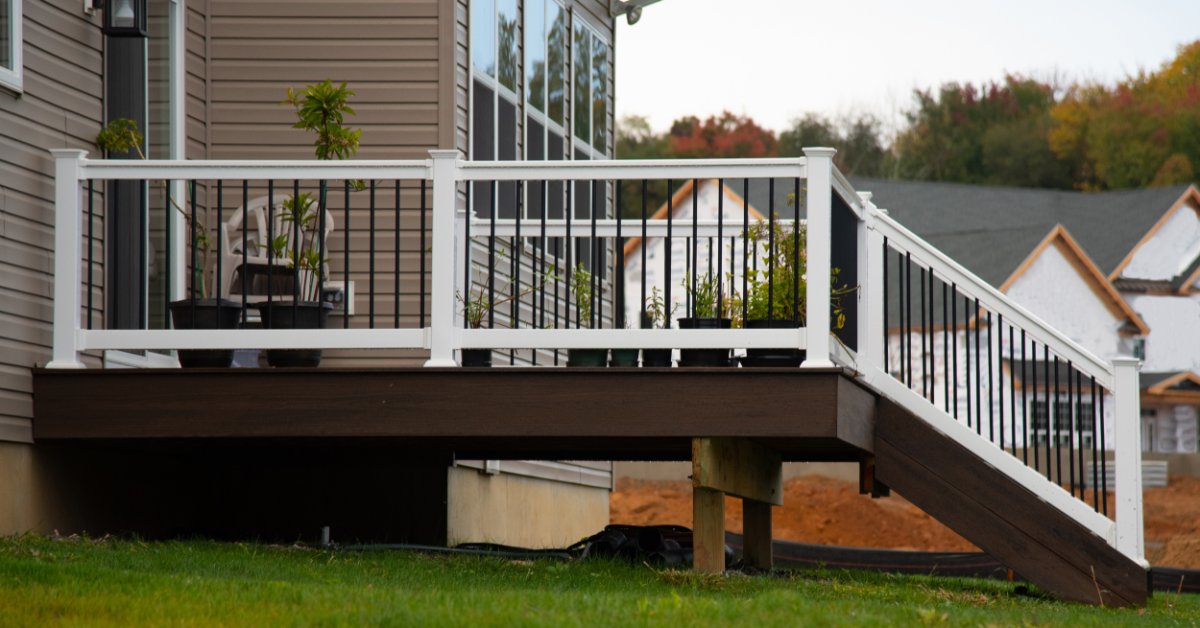
Balusters are the vertical pieces that fill the space between the top and bottom rails. In an all-white vinyl system, those repeated white lines create a solid-looking pattern from farther away, particularly when the railing covers a long section of the deck.
Using darker balusters inside a white frame changes that effect. The thinner contrasting lines recede more than white balusters, which leaves the railing looking more open while the vinyl posts and rails still frame the perimeter.
Post Caps Give the Railing a Defined Finish
Post caps cover the exposed top of each sleeve and finish the transition between the vertical post and the open space above it. Since every post needs a cap, the same shape repeats around the railing and becomes part of its style.
Simple caps suit homes with restrained exterior trim because they keep the upper edge of the railing quiet. More decorative profiles work better when the house already uses shaped trim or traditional exterior details. Keeping the same cap style across the visible posts ties those repeated points together instead of drawing attention to each one separately.
Stair Rails Need to Continue the Main Railing Design
Deck stairs introduce an angled railing section beneath the horizontal run above, so changes in post size or rail profile stand out quickly. When the stair railing uses noticeably different proportions, it can look like a separate system attached to the deck instead of part of the original design.
Using the same post sleeve dimensions keeps the vertical elements connected from the upper deck to the bottom landing. A related rail profile does the same for the angled section. This is especially important when the stairs face the street, where the transition between the two sections stays visible from a distance.
Gate Placement Affects the Railing Pattern
A deck gate creates an opening within a railing run, so its location changes the repeated pattern created by posts and balusters. Placing one in the middle of a long front-facing section interrupts that pattern and draws more attention to the gate itself.
When the layout permits it, a gate fits more naturally near the top of the stairs or beside another existing transition in the railing. The structure already changes at those points, so the opening doesn’t create an extra visual break. Matching the gate frame and infill to the surrounding railing keeps the entrance connected to the rest of the system.
Lattice Finishes the Space Below a Raised Deck
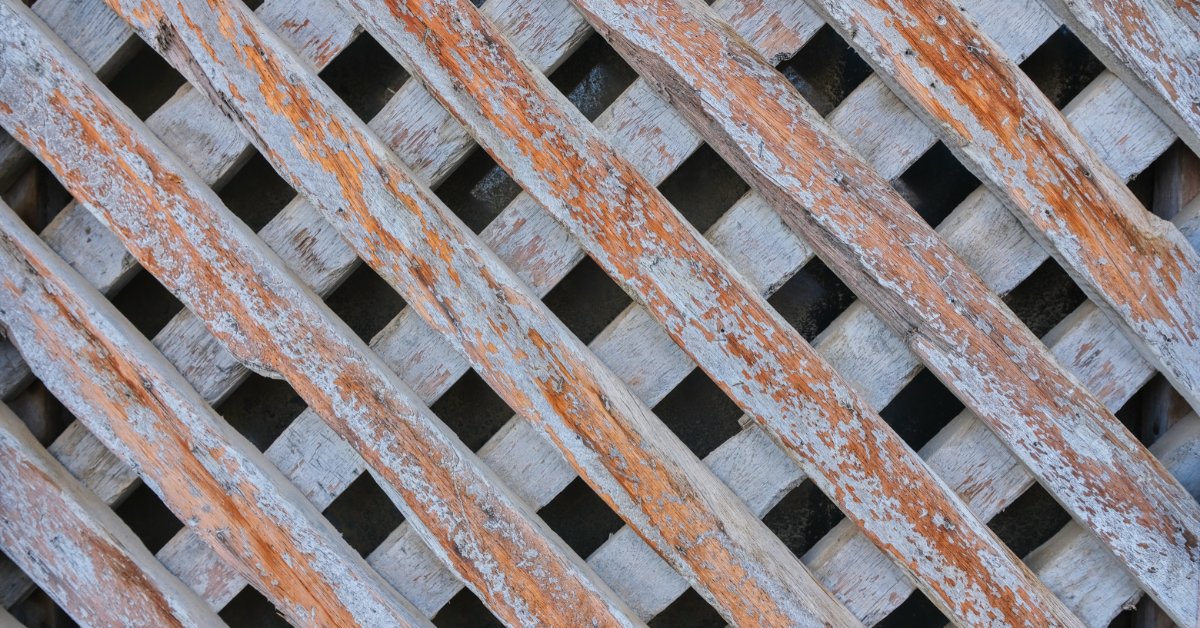
A raised deck leaves the framing and open area beneath it visible from the yard. When that lower section faces the street, the dark opening underneath can become as noticeable as the railing above.
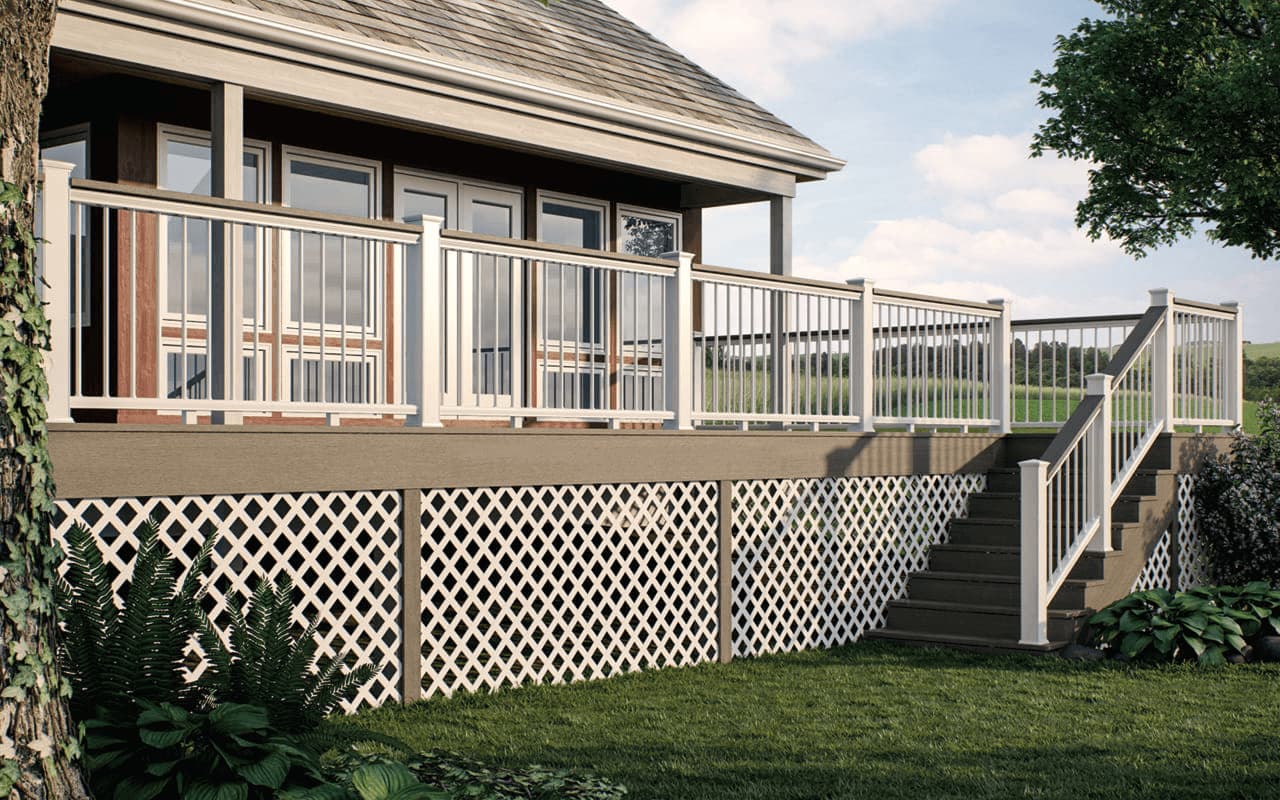
Lattice gives that space a finished surface while leaving openings for air to move beneath the deck. Pattern size affects how dense the lower portion looks, so it should relate to the railing above rather than compete with it. If the railing already has closely spaced vertical lines, a more open lattice pattern keeps the lower section from becoming visually crowded.
Post Cap Lighting Extends the Design into the Evening
Post cap lights replace or sit within the caps at the top of railing posts, which lets the lighting follow the same structure that already defines the deck. Instead of adding separate fixtures along the perimeter, the light comes from points that already belong in the railing design.
Spacing changes the nighttime result. Lighting selected corners and stair transitions creates defined points around the deck without turning every post into a bright focal point. The fixture should also stay proportional to the sleeve beneath it, since an oversized cap changes the apparent size of the post after dark.
Front-Facing Sections Deserve More Design Attention
Not every railing section contributes equally to curb appeal. The side facing the street or driveway stays in view the longest, while sections behind the house may barely appear from those same angles.
That gives you a useful priority when you’re updating an existing railing without changing every component. Decorative post caps or contrasting balusters have more visual impact when they appear across the front-facing run. Less visible sections can stay simpler without weakening the view from the street. Concentrating detail where people actually see it also keeps the exterior from looking overloaded with decorative elements.
Repeated Details Make Separate Sections Look Related
A deck may include a main railing run along with stairs, a landing, or another section that changes direction. Those areas don’t need identical shapes to look connected, but repeating one visible detail gives the eye something consistent to follow across the structure.
The same post cap on the main deck and stair posts creates that connection without adding another decorative feature. Matching baluster color across separate runs works the same way. Repetition is most effective when you use it selectively, since too many competing details make the railing busier rather than more unified.
Improve The View from the Street
These are just some innovative vinyl decking designs that can improve your deck’s appearance from the street. Pick out one or two that fit the look you want and incorporate them into your railing design.
Need more vinyl deck rail ideas? Deck Expressions has an inspiration page with additional railing designs to inspire your project and give you more options as you plan the finished look.