Privacy Solutions Using Decorative Lattice Work
Posted by Deck Expressions on Oct 30, 2026
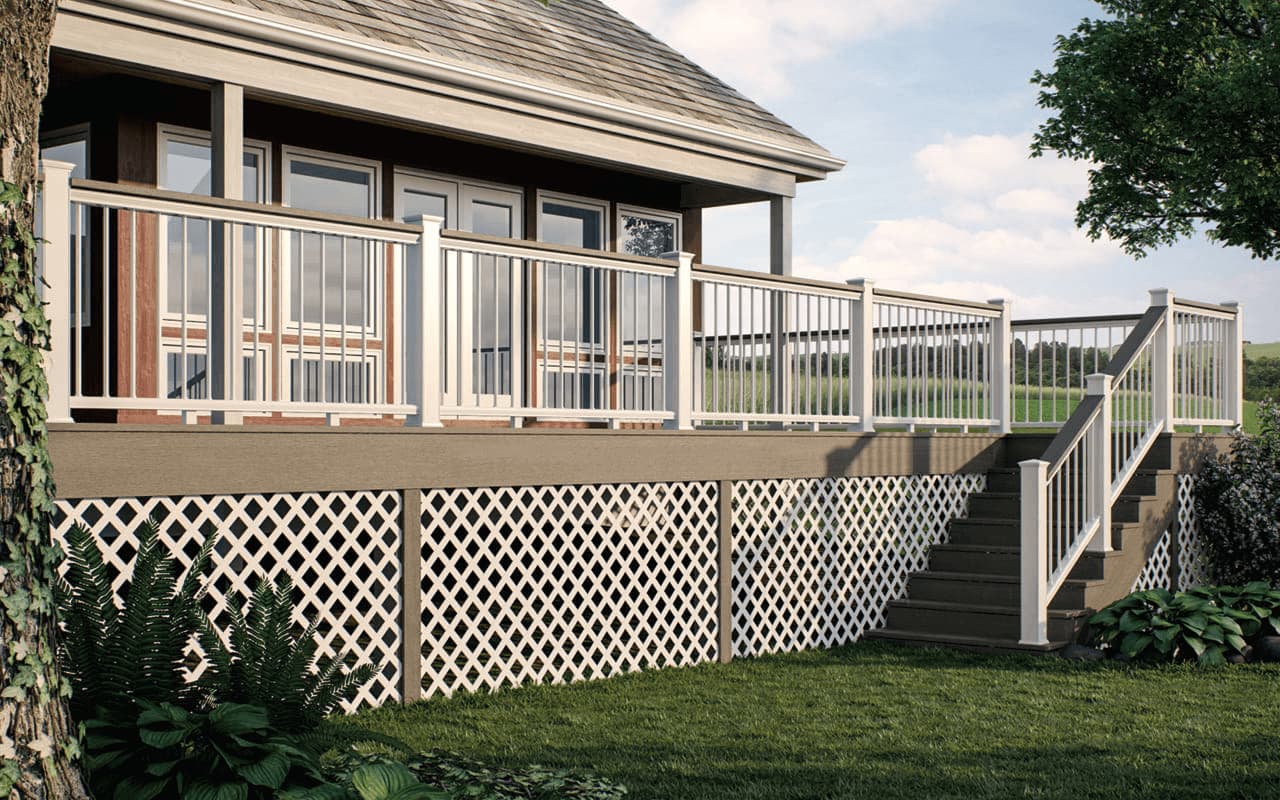
Lattice is an openwork panel that many homeowners commonly use to cover the space beneath a deck. This gives the deck a more finished appearance by concealing the exposed framing below it.
However, lattice has uses beyond skirting, including privacy screens around the deck itself. If you want more privacy while still getting daylight through a decorative panel, the pattern and placement deserve some thought. Here are nine privacy solutions using decorative lattice that reduce views into your outdoor space without requiring a solid wall around the entire deck.
Choose a Tighter Lattice Pattern
A lattice panel’s openings determine how much of your deck remains visible through it. Wide openings leave larger gaps between the strips, so someone looking toward your deck has a less obstructed view.
Privacy lattice reduces those gaps with more closely spaced strips. As a result, the panel conceals more of the area behind it while retaining the openwork appearance.
When comparing patterns, look at the openings rather than the overall panel size. Two panels with identical dimensions offer different amounts of privacy if one has a tighter pattern, even when you install them in exactly the same position.
Place Lattice Across the Unwanted View
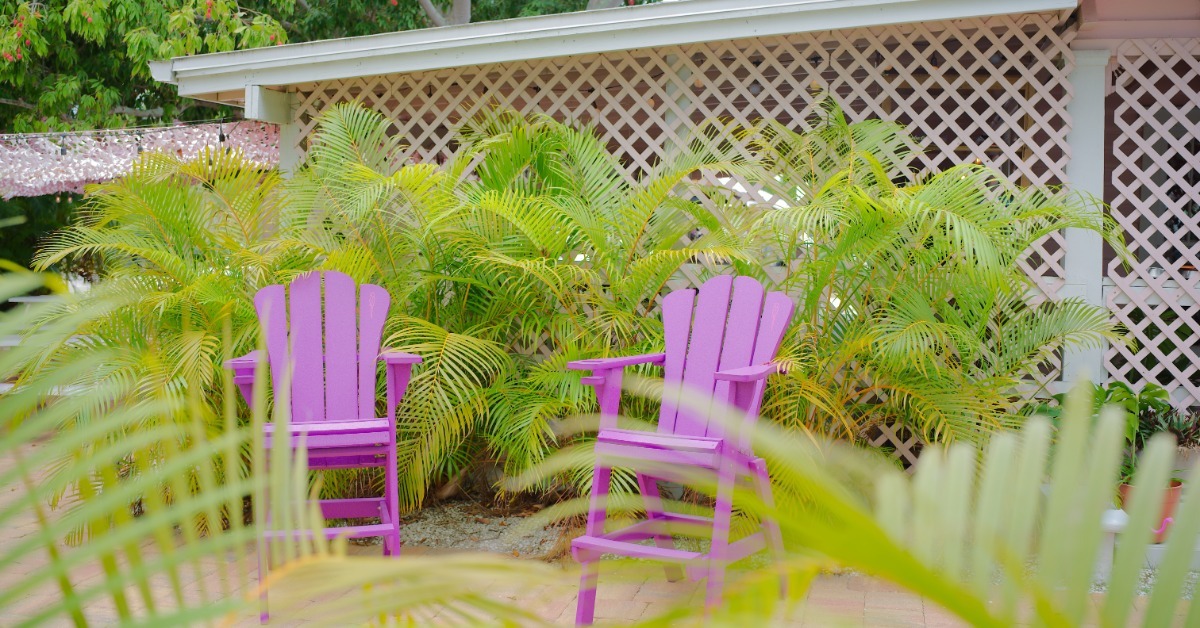
Even a dense lattice panel won’t provide much privacy if it sits beside the view you’re trying to block. Its position needs to correspond with the direction from which someone can see your deck.
For example, if your neighbor’s ground-floor window faces your seating area, place the lattice between the window and your chairs. This blocks their direct view of where you sit.
From your usual seat, look toward the window and identify where the lattice would interrupt that view. You can then test the position before installing the permanent supports.
Raise the Screen Above Seated Eye Level
A screen that stops below your shoulders leaves your upper body visible when you sit down. For better coverage, the panel needs to extend above the line between your seat and the person looking toward it.
Your furniture height affects where that upper edge belongs. A raised dining chair requires more screening height than a low lounge chair in the same location.
Because of this, measuring from the deck surface alone doesn’t tell you whether the screen is tall enough. Testing the proposed height while seated gives you a more useful reference for the area you want to conceal.
Create a Private Seating Nook
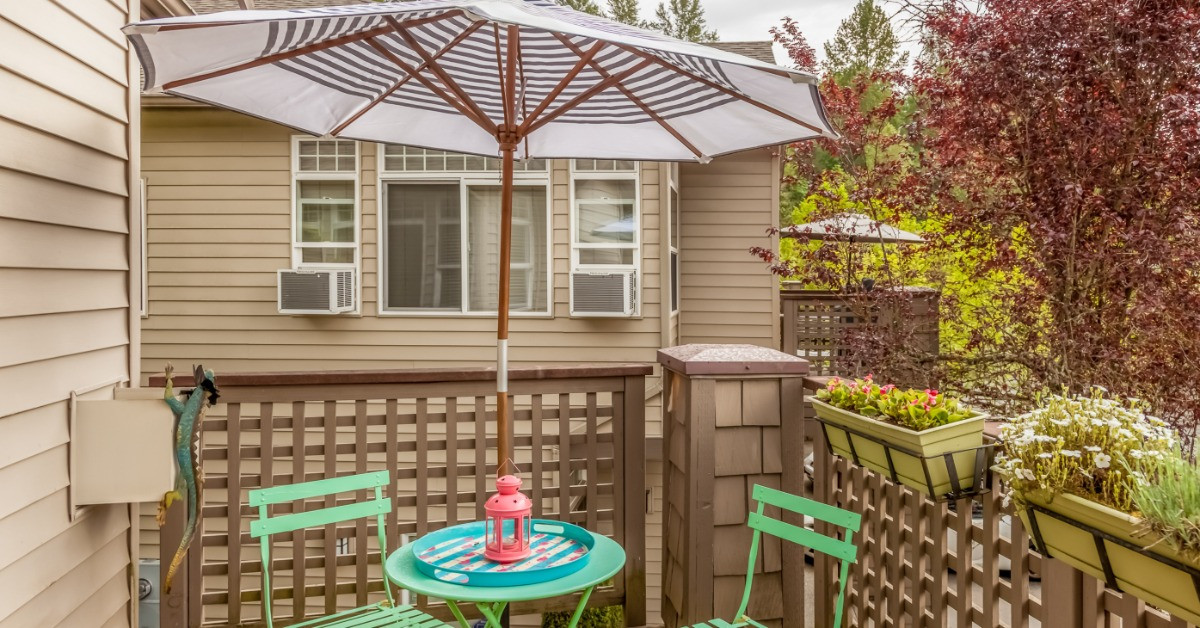
You don’t have to place every lattice screen along the deck’s perimeter. A partition closer to your furniture creates a smaller private area within a larger outdoor space.
For instance, lattice beside a reading chair separates it from the main gathering area. This reduces direct views from elsewhere on the deck, giving you somewhere to sit without being in the middle of every conversation.
The partition’s size should correspond to the nook rather than the entire deck. A section that extends just beyond the chair provides separation without dividing more space than you intended.
Grow Climbers Across the Lattice

Climbing plants increase privacy by covering openings that the lattice leaves exposed. As foliage spreads across the panel, the combination provides denser screening than the bare pattern.
For even coverage, guide new stems toward the empty sections rather than letting all the growth gather near the top. This encourages leaves to fill the gaps at the height where you need privacy.
The plant’s seasonal growth determines how long that coverage lasts. A deciduous climber loses its leaves during colder months, so you’ll return to the lattice’s original level of screening until new foliage develops.
Overlap Two Lattice Patterns
A second layer of lattice reduces visibility through the first when you offset the patterns. Instead of lining up the openings, you position the second panel’s strips behind them.
This interrupts some of the direct views that pass through a single layer. However, the amount of coverage changes with the offset, so placing two panels together doesn’t automatically produce the result you want.
Before securing them, move one panel gradually while looking through both from the direction you want to screen. Once the strips cover the desired gaps, a frame that supports both layers holds that arrangement in place.
Screen the Opening Between Porch Posts
On a porch, the space between two existing posts provides a contained location for lattice. Screening one opening reduces views from that side without extending the panels across the entire front.
The opening beside your seating area is the place to begin. If a neighboring house overlooks that side, lattice between those posts interrupts the view where you spend time.
A frame around the panel connects the screening visually to the posts and supports its edges. With the lattice contained within that opening, the remaining sections of the porch stay open to the yard.
Add Lattice Overhead
A neighboring upper-story window looks down onto your deck, so a side screen may leave that view unobstructed. Lattice across a suitable pergola structure adds partial screening above the seating area.
From an elevated angle, the strips interrupt portions of the downward view. The openings still admit daylight, although they prevent the surface from providing complete concealment.
The result depends on the window’s position relative to the lattice pattern. Testing a section above your intended seat shows whether the strips interrupt that particular view before you commit to covering the full pergola.
Continue the Screen Across an Entrance
An entrance through a lattice screen leaves a gap that someone can see through, even when the surrounding panels provide coverage. A lattice gate closes that gap without removing your access route.
Using the same pattern as the adjoining screen gives the closed gate a similar level of privacy. Its frame holds the lattice in shape as the gate opens and closes.
The gate should cover the opening without requiring an awkward squeeze past nearby furniture. When there’s room for its full swing, you can use the entrance normally and close it again whenever you want the screening.
Give Your Deck More Privacy
Decorative lattice can improve the privacy of your deck if you position it where outside views reach your seating area! Try these solutions and give yourself more separation while you spend time outdoors.
At Deck Expressions, we sell porch lattice from Deckorators. Shop our lattice selection and find the right pattern for your deck privacy project today!