8 Tips for Mixing Railing Materials for Custom Deck Design
Posted by Deck Expressions on Apr 01, 2026
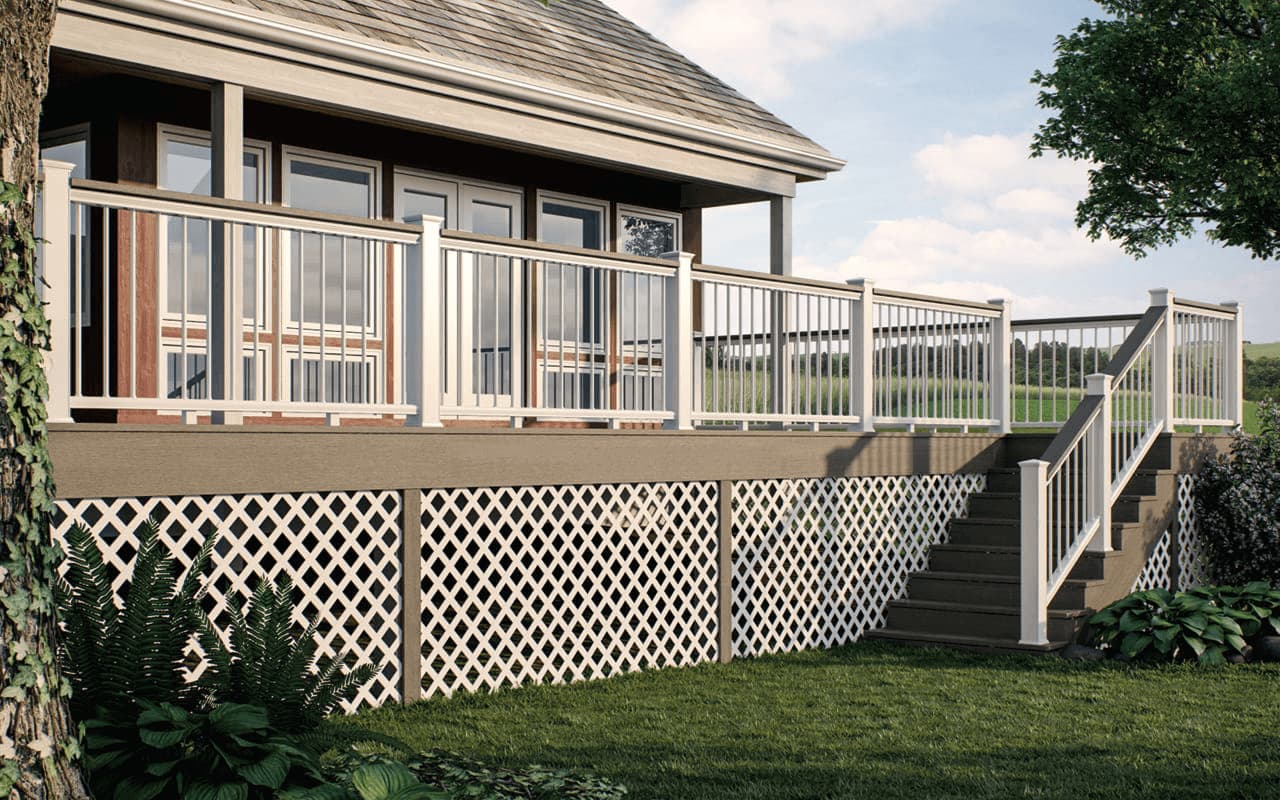
Mixing railing materials has become a popular way to give a deck a more customized look. Instead of relying on a single material throughout the entire railing system, this approach combines different finishes or components to create more visual interest. When it’s done well, the result can feel more layered, polished, and connected to the overall design of the outdoor space.
That added flexibility is part of what makes mixed-material railings so appealing. Different materials bring different strengths, and with the right combination, a railing can do more than frame the deck. It can help define the style of the entire space. So let’s take a look at some strategies homeowners can use for mixing railing materials to create a more custom deck design.
1. Start With the Overall Style of the Deck
Before choosing materials, it helps to look at the deck as part of the full exterior rather than as a separate feature. A railing should support the home’s architecture and the surrounding finishes, not compete with them. When the railing style fits the deck and the house, the final result feels more polished right away.
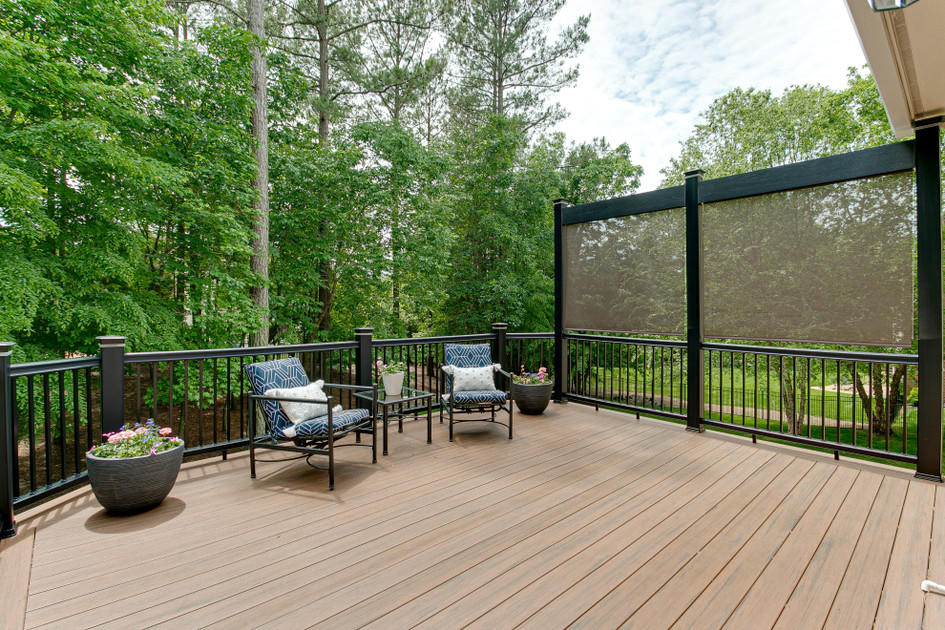
For example, a modern deck might pair sleek metal balusters with a composite frame for a sharper, more minimal look. A more classic or transitional home may look better with a softer combination, such as composite posts with metal infill or a wood-look top rail with darker accents. The point isn’t to force contrast just because mixing materials sounds appealing. It’s to choose a combination that already makes sense for the structure it belongs to.
2. Use Contrast With Intention
One of the biggest advantages of mixing railing materials is the ability to create visual contrast. That contrast can come from color, texture, sheen, or even the thickness of different components. When used carefully, it adds dimension to the railing and helps certain design features stand out.
The part people tend to overdo is piling on too many competing elements at once. A better approach is to create one or two clear points of contrast and repeat them consistently. Dark metal balusters against lighter posts, or a rich top rail paired with black infill, can add interest without making the deck look busy. When the contrast feels controlled, the railing reads as custom instead of chaotic.
3. Let One Material Lead
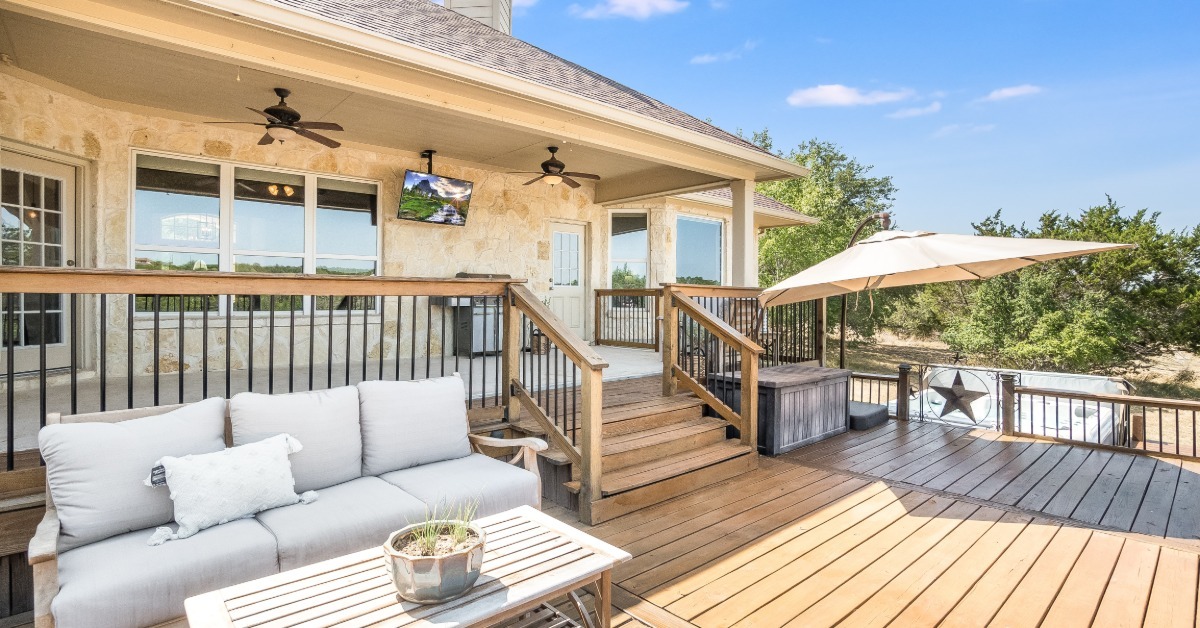
Mixed-material designs usually look better when one material takes the lead, and the other plays a supporting role. That keeps the railing grounded and gives the eye a clear sense of structure. Without that hierarchy, the design can start to feel fragmented.
In practical terms, that might mean using composite for the main frame and introducing metal in the balusters or decorative accents. It could also mean using darker metal as the dominant visual element, while a secondary material softens the look at the top rail or posts. Either way, the goal is to avoid a fifty-fifty split that makes both materials fight for attention. When one leads and the other supports, the railing feels more balanced.
4. Think About Function, Not Just Appearance
A good mixed-material railing shouldn’t be chosen on looks alone. Different materials perform differently over time, and those differences can help shape a smarter design. In many cases, the best combination is one that gives the deck the appearance someone wants while also improving long-term practicality.
That might mean pairing a low-maintenance frame with an infill that brings a more refined visual contrast. It could also mean using a sturdier material in high-contact areas while reserving a different finish for the more decorative parts. This kind of planning helps the railing do more than just look good in photos. It makes the design more useful in everyday life, which is usually the part that matters after the excitement of choosing finishes wears off.
5. Keep the Color Palette Tight
Even when mixing railing materials, the custom deck design still needs to feel cohesive from a color standpoint. A tight palette helps tie together varied textures and finishes, keeping the design coordinated rather than scattered. That doesn’t mean everything has to match exactly, but the tones should still relate to one another.
A simple way to do that is to pull colors from nearby elements, such as the deck boards, trim, siding, or exterior accents. Repeating those tones helps the railing feel like part of the full outdoor space rather than a separate design experiment. When too many unrelated finishes get introduced, the custom effect starts to disappear. It’s hard for a railing to look high-end when every part seems to be arguing with the next one.
6. Pay Close Attention to Transitions
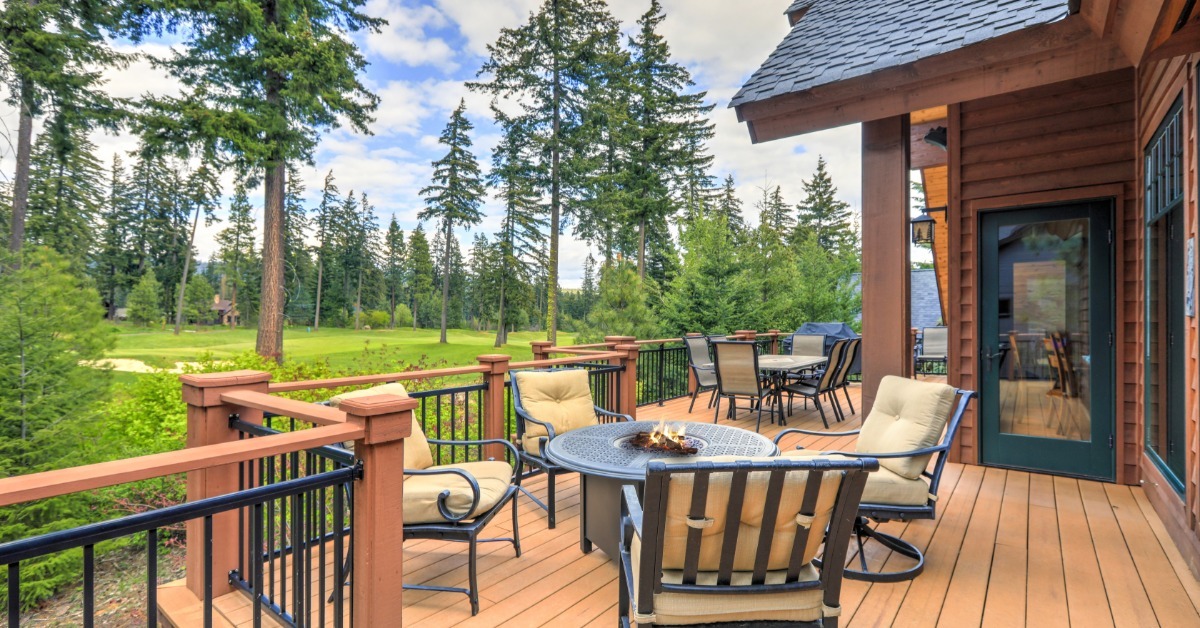
Where materials meet often determines whether a mixed-railing design looks clean or awkward. A combination can sound great in theory, but if the transitions aren’t handled well, the finished product can feel choppy. That’s why the connection points deserve just as much attention as the materials themselves.
Posts, brackets, caps, and rail profiles all affect how smoothly the design comes together. A clean transition can make two different materials, like stone column caps on a wooden post, feel naturally connected, while a clunky one can make even premium components look mismatched. This is especially important in highly visible areas, such as stair sections, corners, and end posts. The better those details are resolved, the more intentional the whole railing system will feel.
7. Use Repetition to Make the Design Feel Deliberate
Repetition is one of the easiest ways to make mixed materials feel purposeful. When a color, finish, or material appears more than once across the railing, it creates rhythm and helps unify the design. That sense of consistency makes the overall look easier to read.
For instance, if black metal appears in the balusters, it should also show up in the hardware, lighting, or nearby exterior details. If a warm-toned top rail is part of the design, carrying that tone into another visible feature can help strengthen the connection. Repetition doesn’t need to be heavy-handed. It just needs to be noticeable enough that the material choices feel coordinated rather than random.
8. Balance Custom Style With Long-Term Maintenance
A mixed-material railing may look great on day one, but it should also make sense years down the line. Different materials weather differently, require different levels of care, and can change appearance at different rates. That’s worth considering before finalizing a combination that looks good in a sample set but becomes less appealing once real use enters the picture.
A smart custom design balances appearance with upkeep so the railing still feels like a good choice after the novelty wears off. If one material is especially easy to maintain, it may make sense to use that in the most visible or high-contact areas. If another material is more decorative, it might work better as an accent rather than the dominant feature. The best-looking railing usually isn’t the one with the most going on. It’s the one that still looks thoughtful after seasons of weather, use, and the usual human talent for ignoring maintenance until something starts annoying them.