How To Match Railings with Deck Architecture
Posted by Deck Expressions on Feb 27, 2026
A deck railing plays a defining role in how a deck looks and feels. It frames the perimeter, defines sightlines, and shapes how the entire structure feels from the yard. When the railing matches the home’s architecture, the deck looks intentional and complete. When it doesn’t, it can feel disconnected from the rest of the exterior, even if the materials themselves are high quality.
To get this just right, your goal shouldn’t be just to chase trends or copy what works on another house. It should be to choose a railing system that supports the design language your home already has. Lines, proportions, materials, and color all play a role, and knowing how to match your railing with your deck architecture will help create a cohesive look that feels built-in rather than added later.
Match Railing Style to Architectural Design
Your home already communicates a style through its rooflines, trim, siding, and overall structure. The railing should reinforce that identity rather than compete with it. Simple homes benefit from clean lines, while more detailed homes typically need a railing with presence and structure.
Modern and Contemporary Homes
Modern homes are defined by simplicity and restraint. Flat planes, sharp edges, and minimal ornamentation create a streamlined profile, so a bulky or highly decorative railing can disrupt that balance quickly.
Slim aluminum systems are often a natural fit in these settings. Dark finishes like matte black or bronze highlight the geometry of the deck without adding visual clutter, and horizontal infill or cable railing can further emphasize long, clean lines. The result is a railing that frames the space while keeping the overall design light and open.
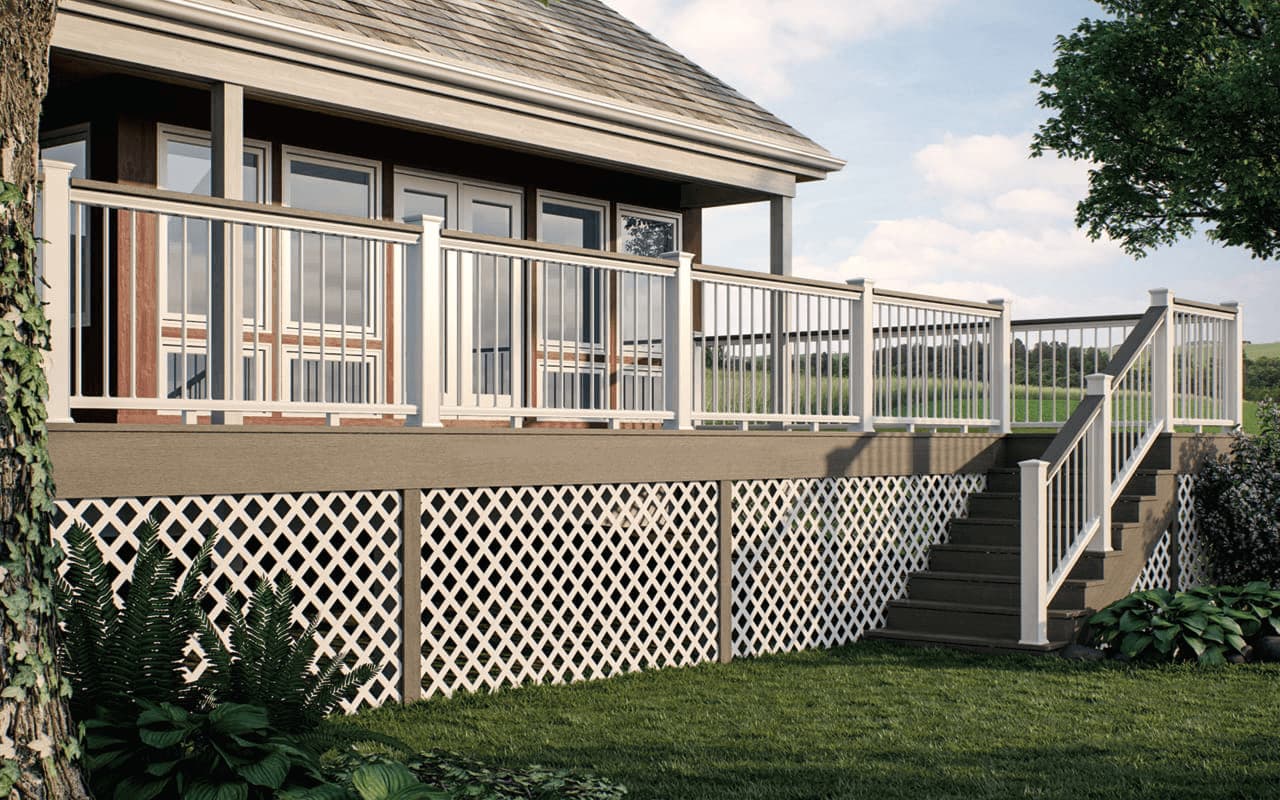
Traditional and Colonial Homes
Traditional homes lean heavily on symmetry and proportion. Details matter, and the railing should reflect that balance rather than introduce an overly modern or minimal aesthetic.
Uniform baluster spacing and clearly defined top rails support the structured appearance these homes are known for. Composite or vinyl railing systems in neutral tones, such as white, beige, or bronze, tend to complement classic siding and trim. Decorative post caps and slightly more substantial profiles help the railing feel consistent with the architectural detailing found throughout the home’s exterior.
Farmhouse and Rustic Designs
Farmhouse and rustic homes combine simplicity with strength. The look is straightforward but not stark, and the railing should echo that grounded character.
Dark metal railings can create a subtle contrast against lighter siding, while wood-look composite systems maintain warmth without the maintenance demands of natural wood. Vertical balusters typically align well with this style, reinforcing a practical, time-tested aesthetic. The key is choosing a system that feels sturdy and honest rather than overly refined.
Coastal and Waterfront Properties
Coastal homes often prioritize light, openness, and views. Heavy railing systems can block sightlines and feel visually intrusive, especially on elevated decks overlooking water or wide landscapes.
Cable railing systems and streamlined aluminum profiles are strong fits for this environment. White or light-toned systems pair well with breezy coastal exteriors, while corrosion-resistant materials are especially important in humid or salt-air conditions. The focus should remain on openness and durability, allowing the surroundings to remain part of the design.
Coordinate Railing Material with Decking
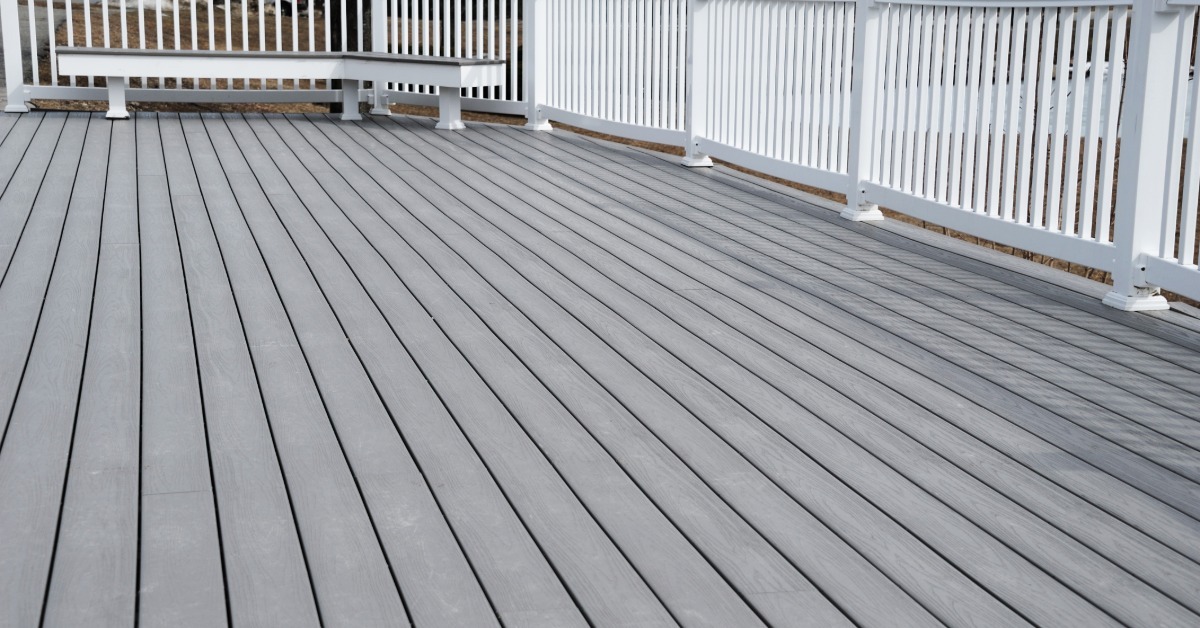
Since decking and railings share the same footprint, they should feel like they belong together. When materials clash in tone or visual weight, the entire deck can feel fragmented.
Coordinating materials creates visual flow and makes the railing feel integrated into the structure. Whether the goal is a seamless blend or a defined contrast, the pairing should appear intentional.
Composite Decking + Composite Railings
Pairing composite decking with composite railing systems often produces a more unified appearance. Matching or complementary color families helps prevent the railing from feeling disconnected from the surface underfoot.
Composite railings also tend to have a solid, substantial look that balances well with the density of composite deck boards. When both elements share similar textures and tones, the space feels cohesive and thoughtfully designed rather than assembled from unrelated parts.
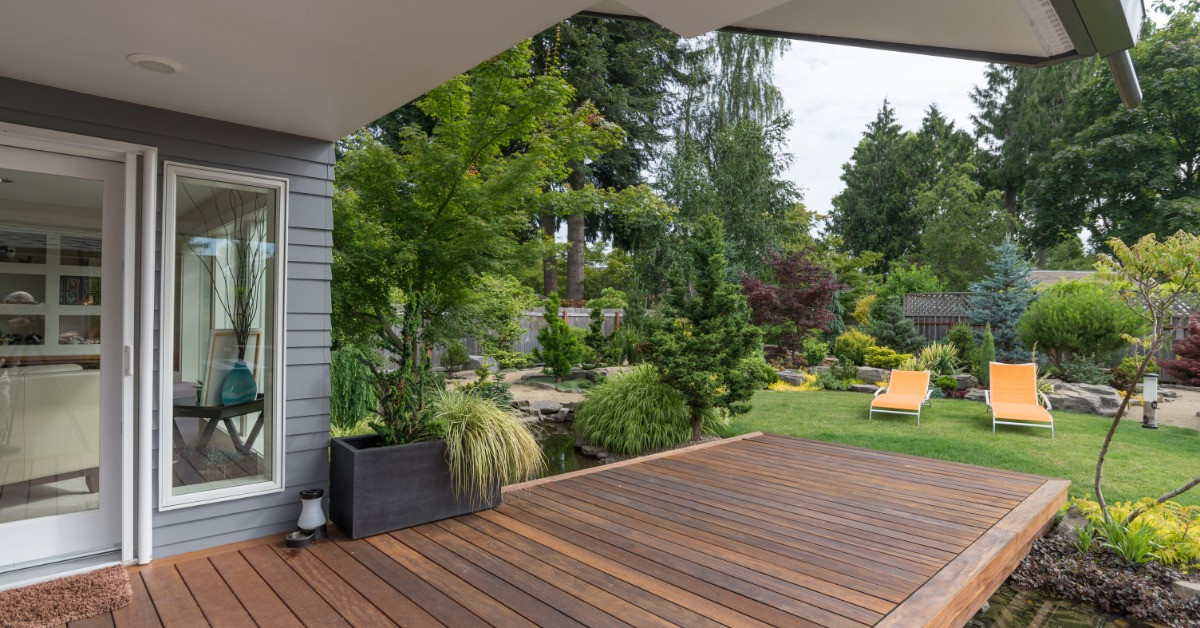
Wood Decking + Metal Railings
Wood decking introduces warmth, grain variation, and a natural feel. Metal options, including galvanized steel railings, can create contrast that frames the deck without overpowering the wood’s character.
Because metal systems typically have slimmer profiles, they allow the decking to remain the focal point. Dark metal frames can outline the perimeter and add definition, while still keeping the overall design visually light. This pairing works especially well when you want to blend traditional materials with a slightly more modern edge.
Mixed-Material Combinations
Some designs intentionally blend materials for added depth. Metal frames with composite infill or cable inside aluminum posts can create layered visual interest without becoming busy.
The key to mixing materials successfully is consistency. If you choose a mixed approach, repeat that choice across the entire deck to ensure it looks deliberate. Random combinations in isolated sections can feel unplanned, while a consistent pattern creates structure and rhythm.
Get Proportion and Scale Right
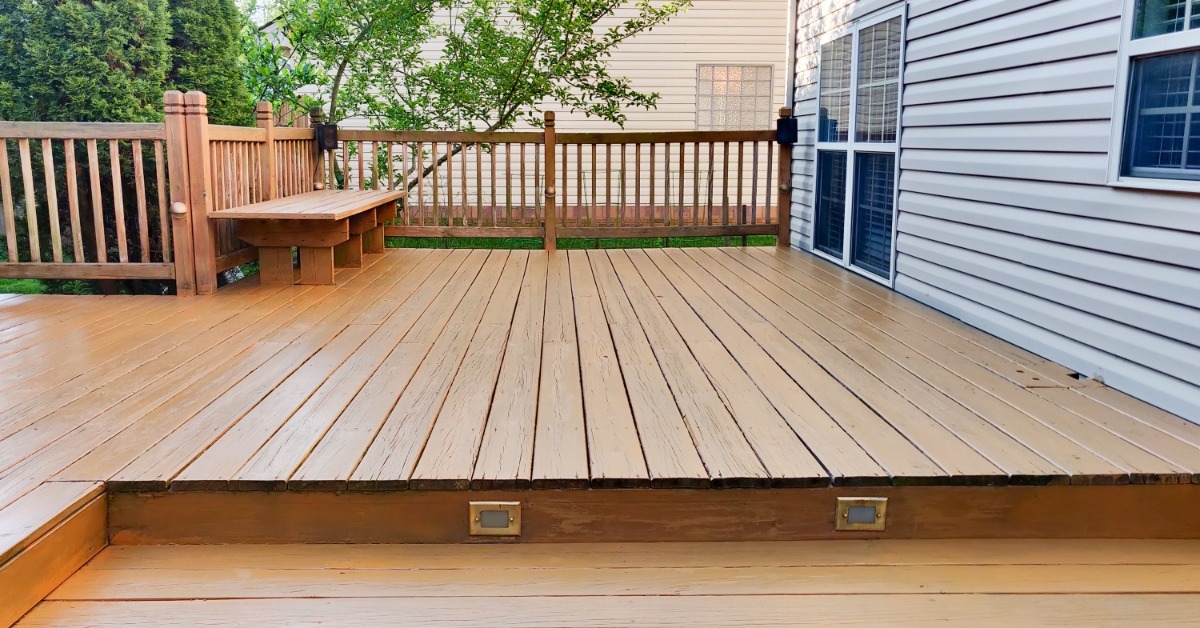
Even the correct style can look off if the proportions are wrong. That’s why you need to ensure your railings match the size, height, and overall visual weight of the deck’s architecture.
A large, multi-level deck typically calls for more substantial posts and framing elements to visually anchor the space. On smaller or more compact decks, oversized components can dominate the footprint, making the area feel crowded. Keeping scale in mind ensures the railing supports the structure rather than competing with it.
Post Size and Spacing
Post size and spacing play a major role in how balanced a railing appears. Larger decks often benefit from thicker posts that visually ground the system, especially when the deck sits high above grade.
Consistent spacing between posts and balusters creates a rhythm, making the railing feel orderly and intentional. Uneven spacing or mismatched components can draw attention for the wrong reasons, even if you technically install everything correctly.
Rail Profile and Top Cap Design
The top rail is one of the most noticeable features because it defines the upper edge of the deck. Flat, drink-friendly top rails often suit modern and transitional spaces, while more decorative molded caps may complement traditional homes with detailed trim.
Looking at the fascia boards, window trim, and other exterior lines on the home can help guide this choice. When the railing profile echoes those shapes, the entire deck feels more integrated into the architecture.
Visual Openness vs. Structure
Some designs benefit from strong framing and clearly defined borders. Others call for minimal obstruction to preserve views and maintain a lighter appearance.
Cable systems and slim aluminum profiles emphasize openness, making them ideal for decks where sightlines are a priority. Thicker balusters and framed panels add more structure and visual weight. Choosing the right balance ensures the railing enhances the architecture rather than distracting from it.