Deck Lighting Placement Tips for Outdoor Ambiance
Posted by Deck Expressions on Apr 22, 2026
Good deck lighting changes how the space feels after sunset. It can make a compact platform feel warmer and give a larger backyard a calmer, more finished look. When the glow lands in the right places, the deck feels usable without losing its relaxed character.
The strongest lighting plans don’t try to brighten every inch of the surface. They guide the eye and soften edges, which helps people move through the space without turning the deck into a spotlighted stage. That’s why thoughtful placement matters so much when you’re planning deck lighting for outdoor ambiance.
Think in Zones, Not Fixtures
Before you start choosing fixture locations, you need to decide how you want each part of the deck to work at night. Dining areas need more clarity than lounge corners, while pathways to the yard need guidance more than decoration. When you think in zones first, placement starts to serve the experience instead of just the layout.
That approach also keeps you from forcing symmetry where it doesn’t help. A deck rarely gets used evenly from edge to edge, so the lighting plan shouldn’t pretend that it does. Once you map the deck by function, it becomes easier to place lights with purpose and keep the mood calm.
Outline Edges Without Tracing Every Board
Edge lighting helps define the deck after dark and gives the platform a finished shape. A soft perimeter glow makes the space easier to read from the yard and helps people sense where the deck ends without relying on harsh flood lighting. That subtle outline often does more for ambiance than a brighter general wash.
You don’t need to trace every board or light every post to get that effect. Leave intentional gaps so the deck doesn’t look like a runway, and focus on the sides that disappear most once the sun goes down. Corners and drop-offs usually deserve more attention than long stretches that already stay visible.
Give Stairs Their Own Lighting Plan
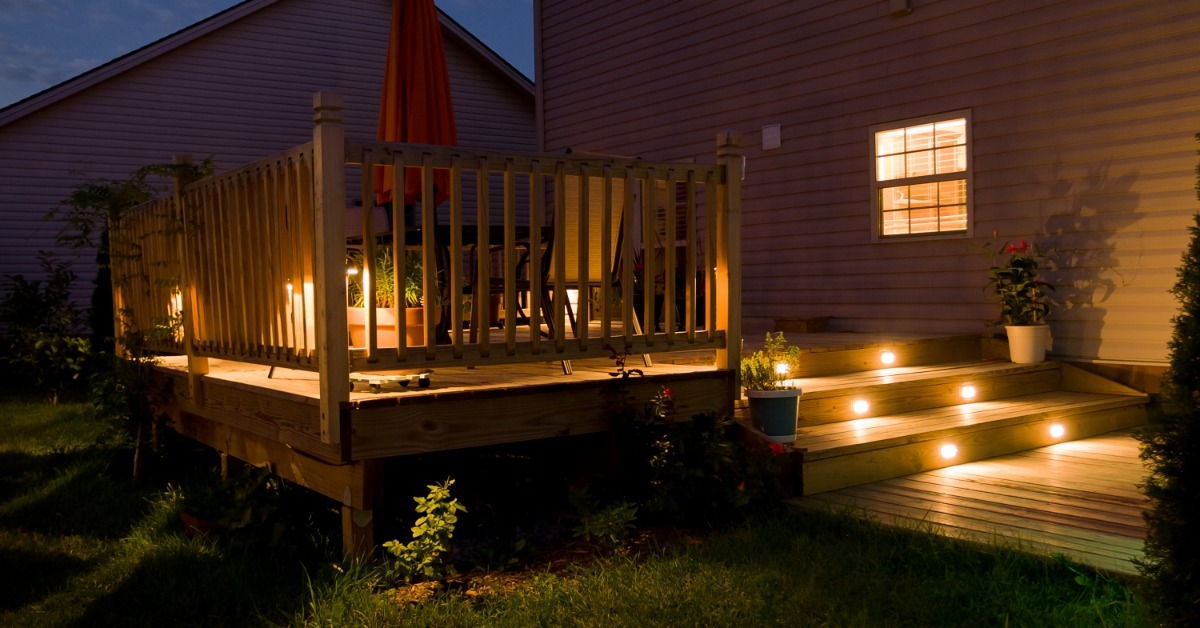
Stairs deserve their own plan because people judge depth poorly in low light. Each step should feel easy to read, and the light should support movement without forcing anyone to stare into a bright beam. Low-mounted lights or a gentle wash from the risers usually work better than exposed fixtures aimed outward.
Consistency here matters just as much as placement. If one step lands in shadow while the others stay bright, the whole run can feel uncertain. When stairs turn or meet a landing, give that transition a little extra definition so the route stays clear without looking harsh.
Build Around the Seating Area
Most decks earn their keep when people sit down and stay awhile. That part of the layout needs light that feels flattering and relaxed rather than sharp. Indirect light usually works best around chairs and lounge areas because it creates comfort without glare.
Fixture height matters too. If every source sits at eye level, the space starts to feel visually busy. Mixing heights helps you set up your lights to land on floor lines and tabletops rather than shine directly into people’s eyes.
Keep Task Lights Near Dining and Cooking Spots
Of course, ambiance still has to make room for function, especially near a dining table or grill. These spots need clearer light than a lounge corner, but that doesn’t mean the whole deck should get brighter. Treat them as their own layer and keep the surrounding areas softer so the overall mood stays intact.
Use Railings and Posts as Natural Anchor Points
Railings and posts give you natural anchor points for placement because they already shape the deck visually. Deck lights built into these structural lines tend to feel more intentional than fixtures scattered across open surfaces. They also make it easier to hide hardware and manage wiring routes.
Spacing still matters. If every post produces the same output, the railing can start to pulse visually rather than read as a single clean line. Alternating locations or lowering the brightness in shorter runs usually creates a smoother result.
Let Shadow Create Depth
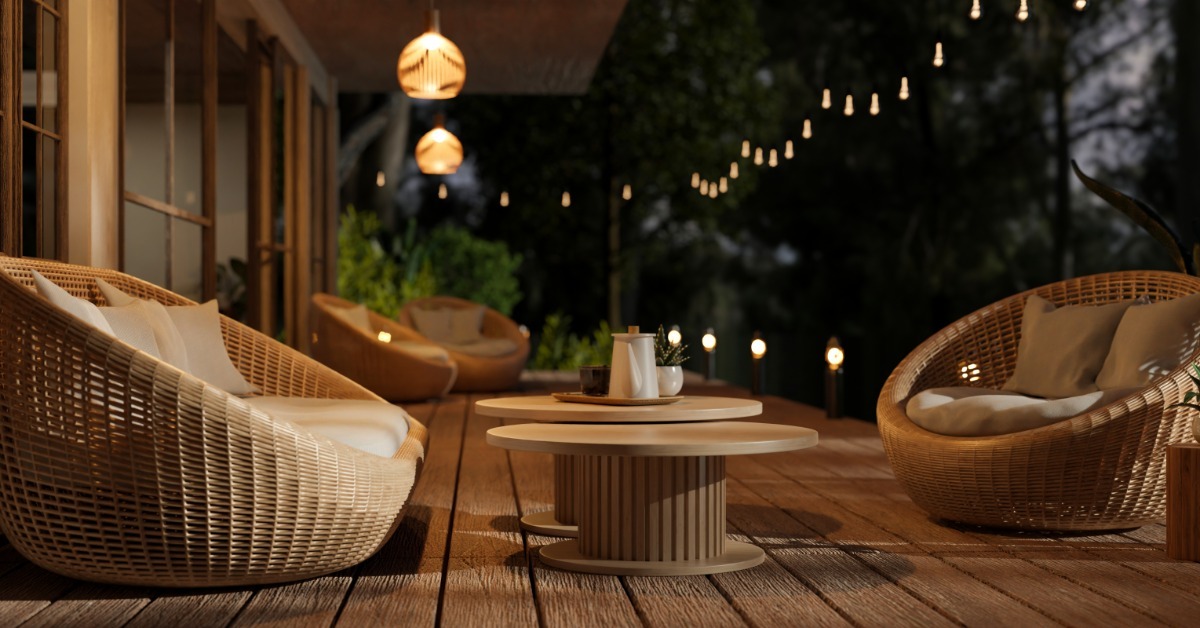
Good ambiance doesn’t come from maximum brightness. It comes from contrast, which means some areas should stay quieter so the lit zones feel warmer and more inviting. Open floor space between focal points gives the deck room to breathe and makes each pool of light more noticeable.
This works especially well near planters or built-in benches. Let those spots carry some of the glow while a farther edge stays understated. With this kind of deck lighting placement, the outdoor ambiance of this space will feel more layered instead of flat.
Match Brightness and Color Temperature
Placement works best when the fixtures share a similar visual language. If one corner throws a cool white beam and another glows warm amber, the deck can feel pieced together even when the layout makes sense. For most outdoor living spaces, warmer color temperatures feel more comfortable and less commercial.
Brightness needs the same discipline. A well-placed light can still ruin the mood if the output is too strong, especially on stairs or near seating. Start with a modest level and increase it only where you have a real problem to solve, like a dark transition or a table that needs more clarity.
Light the Transition Points First
People don’t enter a deck in the middle. They usually come from either a back door or a lower level, and those transition points shape the experience right away. A soft pool of light near the entry helps the space feel welcoming and easy to read.
The key is to avoid overlighting those moments. A harsh blast at the door can wreck night vision before anyone has a chance to settle in. Once the main entry points feel clear, the rest of the deck can stay more restrained.
Check Sightlines From Inside the House
Deck lighting doesn’t only affect the people outside. It also changes what you see through the windows at night, which is why placement should account for interior sightlines as well. A fixture that feels subtle on the deck can create glare in the glass or pull attention away from the rest of the backyard.
Walk through the adjacent rooms after dark and look at the layout from a few common viewpoints. If you notice sharp reflections or a source shining straight toward the house, adjust the angle or move the fixture slightly. Small changes here can make the whole design feel more polished.
Mock It Up Before Final Placement
A simple test run can save a lot of second-guessing. Set a few temporary lights in place, wait until dark, and look at the deck from several angles before you commit to the final layout. Real conditions reveal problems you won’t notice on paper.
This step doesn’t have to be complicated. Even a basic mock-up can tell you whether a stair needs more definition or a seating area needs a softer touch. That small effort makes the final placement feel deliberate instead of improvised.